1 / 10

Thermosleeve Slide Deck Cover Page
2 / 10
The design’s main purpose is to react to ongoing or incoming hand tremors. This was
achieved through two EMG MyoWare muscle sensors and their corresponding electrodes,
which detects the filtered electric potential of the muscle and outputs a value in volts.
3 / 10
Our design consists of a glove and compressive sleeve (attached separately for easy assembly),
with electrical heating elements installed throughout it, transmitted through wires.
4 / 10
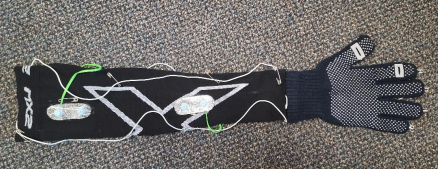
These sensors are used to identify when the user is experiencing a tremor/spasm and has
been equipped to record the time and severity of said spasm as well as lessen the symptoms
through a heating function.
5 / 10
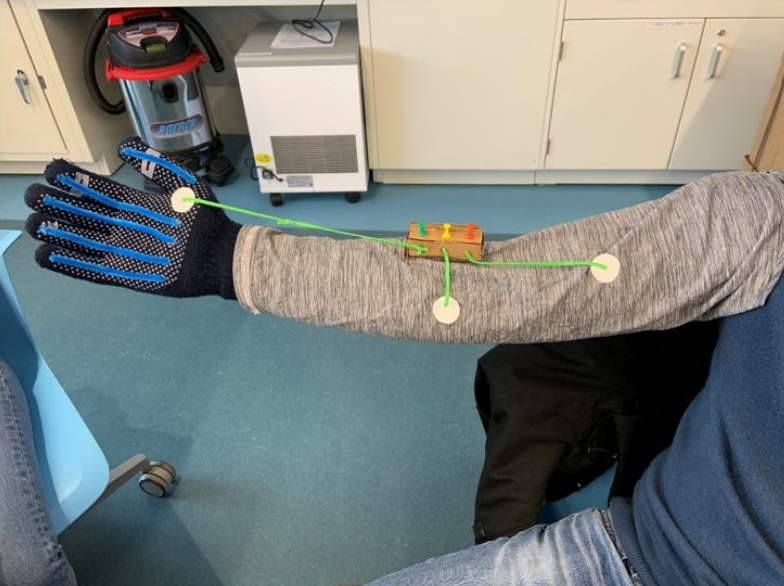
The device is coded to be able to display the severity of the tremor/spasm in real time
through green, yellow, and red LEDs, and this information is then stored into files for
future medical reference either by the user or their physician.
6 / 10
In terms of storage, the device can be stored inside of a housing unit that can
be mounted to different heights of shelves/tables using a clamp.
7 / 10
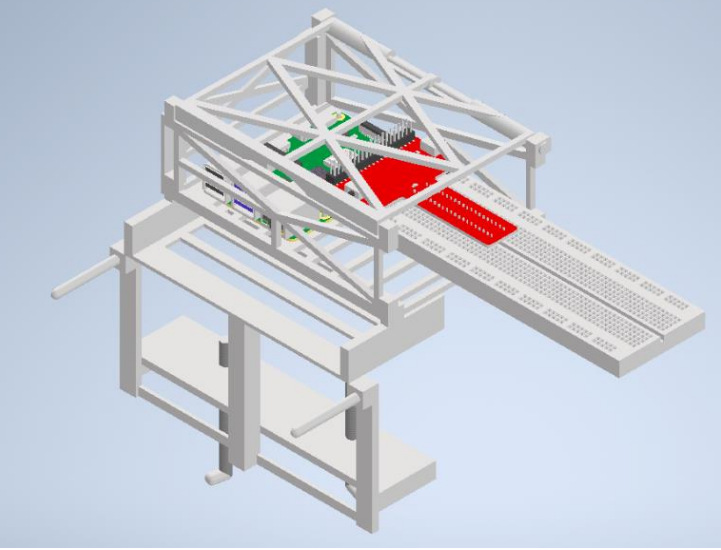
The Raspberry Pi 4, breadboard, and T-cobbler are stored in a compartment at the top that
is covered by a lid, while the sleeve/glove itself can be hung on two pegs at the front for
easy access.
8 / 10
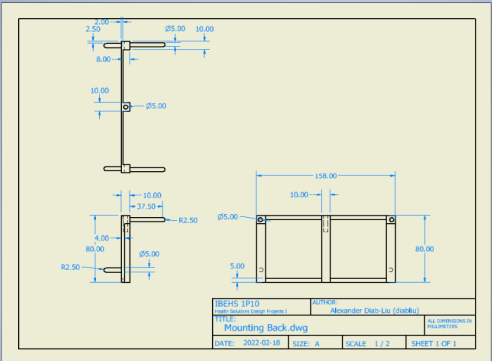
Engineering Drawing Example 1
9 / 10
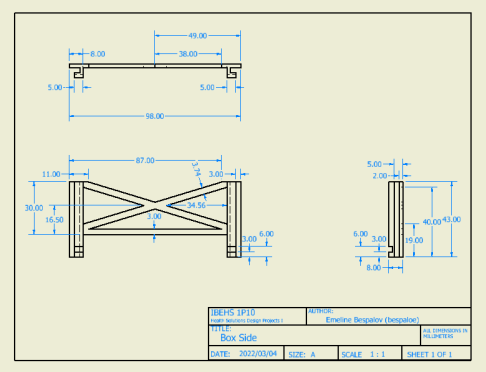
Engineering Drawing Example 2
10 / 10
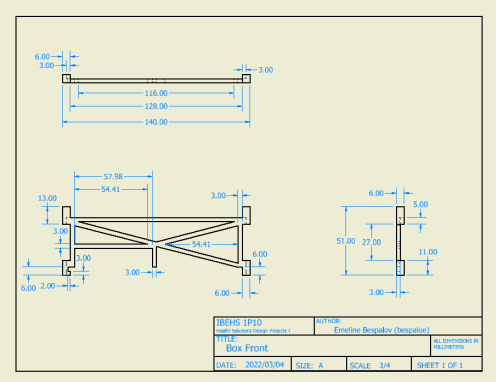
Engineering Drawing Example 3